Table of Contents
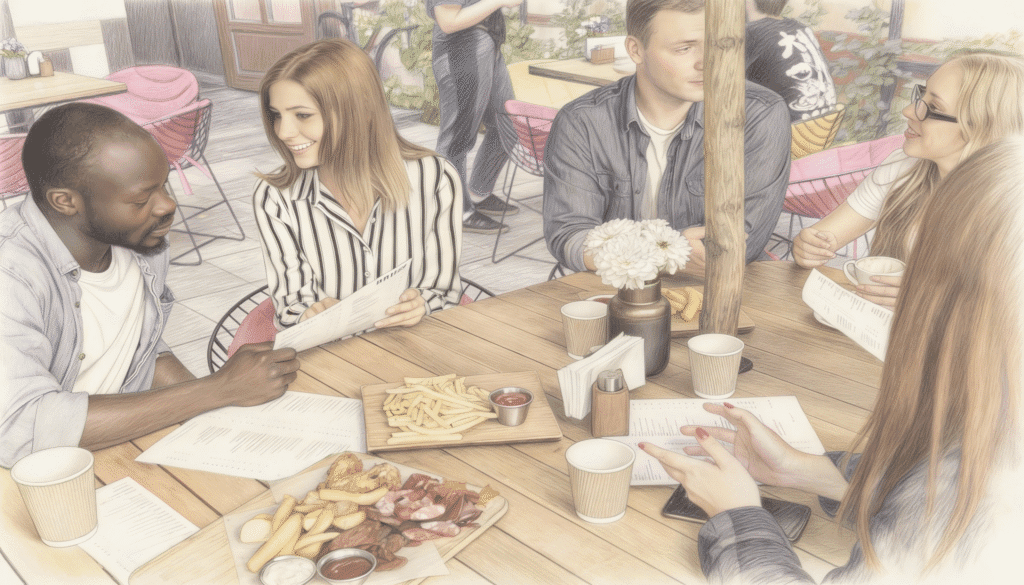
Picture this: eight friends gather at a restaurant to celebrate a birthday. The conversation flows, the wine keeps coming, and someone suggests they split the bill evenly. Everyone nods in agreement. Simple enough, right?
Then the menus arrive. Sarah, who planned to order the grilled chicken, notices Tom eyeing the wagyu steak. She does some quick mental math. If Tom orders the expensive steak, her share of the bill increases whether she orders chicken or not. The steak suddenly looks more appealing. Meanwhile, Tom realizes that if everyone else orders modestly, his steak only adds a small amount to his own portion of the bill. The table has just entered what game theorists call the Diner’s Dilemma, and nobody even knows it yet.
This scenario plays out in restaurants worldwide every night. It represents one of the purest examples of how rational individual choices can lead to collective disaster. The irony? Everyone acts sensibly, and everyone ends up worse off.
The Mechanics of Disaster
The Diner’s Dilemma operates on a brutal logic. When bills split evenly, each person pays only a fraction of what they actually consume. At a table of eight, someone who orders a dish costing forty dollars more than average only pays an extra five dollars. The other seven diners subsidize the remaining thirty five dollars.
This creates what economists call a tragedy of the commons, except the commons is your dinner bill and the tragedy is your dwindling bank account.
The mathematics work against restraint. Suppose the average entree costs twenty five dollars, but the lobster costs sixty. Ordering the lobster adds thirty five dollars to the total bill. Divided by eight people, that’s roughly four dollars and forty cents per person. So the lobster lover gets a sixty dollar meal while contributing only about thirty dollars to their actual cost. The other diners unknowingly donate the difference.
Now multiply this across the table. If three people follow this logic, ordering items costing an extra thirty five dollars each, the total bill increases by one hundred and five dollars. Divided eight ways, that’s about thirteen dollars per person. But here’s the twist: the three who splurged only see their share increase by this amount while enjoying meals worth far more.
The dominant strategy, in game theory terms, becomes clear. Order whatever you want. Your fellow diners bear most of the cost.
Why Smart People Make Dumb Choices
The counterintuitive part arrives when you realize this isn’t about greed. Most people caught in this trap aren’t scheming to exploit their friends. They’re responding rationally to the incentive structure created by splitting the bill equally.
Consider the perspective of someone trying to be considerate. They order modestly, choosing the cheapest pasta on the menu for eighteen dollars. They expect others to do the same, keeping the bill reasonable for everyone. But then the orders start coming in. Steak. More steak. A seafood tower. Suddenly, this considerate person faces a choice: stick with their modest order and subsidize everyone else’s feast, or adjust their order upward to reclaim some value.
The rational move? Order more. At least get something closer to what they’re paying for. This is the dilemma’s cruelest feature. It punishes virtue and rewards excess. The person trying to keep costs down ends up paying premium prices for a budget meal.
Game theorists call this a Nash equilibrium, though the technical term matters less than the outcome. Nobody can improve their situation by changing their strategy alone. If you order modestly while others splurge, you get the worst deal. If you splurge while others order modestly, you get the best deal. If everyone splurges, everyone overpays, but nobody can unilaterally fix it by ordering less.
The only winning move is one nobody wants to make: refuse to split the bill equally. But suggesting this after everyone agreed feels awkward, cheap, or like breaking an unspoken social contract.
The Social Contract Paradox
Here’s where things get psychologically interesting. The custom of splitting bills equally evolved to reduce friction. Nobody wants to be the person calculating exact shares, tracking who had three glasses of wine versus two, or arguing over percentages. Equal splitting feels fair, friendly, and friction free.
Except it’s none of those things once the incentive structure kicks in.
The tragedy is that the social norm designed to preserve friendships creates the exact conditions that strain them. Someone always notices when they ordered a salad and paid for someone else’s surf and turf. Resentment builds quietly. Future invitations get declined. The friendship takes micro damage even though nobody intended harm.
Meanwhile, the person who ordered extravagantly might genuinely not realize the impact. They weren’t trying to game the system. They just responded to the incentives everyone agreed to create.
This reveals something profound about human cooperation. Good intentions and social norms aren’t enough when the underlying incentive structure points the wrong direction. You can’t solve structural problems with personal virtue alone.
When More Information Makes Things Worse
One might assume that awareness of the Diner’s Dilemma would solve it. Surely if everyone understands the trap, they’ll avoid it?
The opposite often happens. Once people understand the mechanics, they become hyperaware of being exploited. This creates a defensive response. “I won’t be the sucker ordering cheap while others feast on my dime.” The result is an arms race of appetizers and premium entrees.
Knowledge of game theory can actually accelerate the race to the bottom. Or in this case, the race to the expensive top of the menu.
There’s a darker version of this where someone deliberately exploits the dynamic. They know exactly how the math works and maximize their advantage. This person becomes what game theorists call a defector. One consistent defector can force everyone else into defensive overspending just to avoid subsidizing them indefinitely.
Solutions That Actually Work
The obvious solution is to simply split the bill by what each person ordered. Problem solved, right? Technology makes this trivial now. Apps can calculate individual totals in seconds.
But this creates new problems. Someone inevitably ordered shared appetizers. Who pays for the bread basket everyone picked at? What about the birthday person who everyone agreed shouldn’t pay? And there’s still that uncomfortable feeling of being the person who brings out the calculator and spreadsheet at dinner.
A better approach involves setting expectations before ordering. The group discusses budget ranges and agrees on rough parameters. “Let’s keep entrees under thirty dollars” or “This is a celebration, order whatever you want.” Clear expectations eliminate the guesswork and anxiety.
Some groups adopt rotating systems. One person pays the whole bill each time, and it cycles through the group. This works brilliantly for regular dining companions but requires trust that the arrangement will continue long enough for everyone to take their turn.
Another elegant solution is categorical splitting. All entrees get averaged together, all drinks get averaged together, and people only pay for the categories they participated in. Someone who didn’t drink wine doesn’t subsidize the wine. Someone who ordered an entree pays the average entree cost. This preserves the simplicity of splitting while eliminating the worst distortions.
The nuclear option is separate checks from the start. Some see this as tacky or overly transactional. But it cleanly solves the incentive problem. There’s no subsidy, no gaming, no resentment. Everyone pays exactly what they consume.
The Repeated Game Changes Everything
Game theory makes a crucial distinction between one time interactions and repeated games. The Diner’s Dilemma looks very different when you expect to eat with these people again next month.
In repeated games, reputation matters. Someone who consistently exploits the bill splitting arrangement gets noticed. Future invitations dry up. The short term gain of overspending gets outweighed by long term social costs.
This creates natural limits on excess. Most people value ongoing friendships more than saving twenty dollars on dinner. The threat of social consequences keeps behavior somewhat in check.
But this only works if the games actually repeat. A dinner with college friends reuniting after years apart? That’s closer to a one time game. The incentives shift back toward the defector strategy because social consequences won’t arrive until the next reunion, if ever.
Business dinners with colleagues you’ll see daily? Strong repeated game dynamics. Everyone knows excessive ordering will be remembered and might affect professional relationships.
The frequency of repetition matters too. Annual dinners provide weak restraint. Weekly dinners create strong incentives for cooperation.
Cultural Solutions
Different cultures have evolved different norms to handle this dilemma. In some Asian cultures, one person typically pays the entire bill as a gesture of generosity and status. This completely eliminates the split bill problem, though it creates a different game around who gets to pay.
Dutch culture gives us the term “going Dutch” precisely because of the norm of paying individually. The cultural expectation removes the awkwardness of requesting separate checks.
These cultural solutions work because everyone knows the rules in advance. The American approach of deciding at the last minute creates ambiguity that enables gaming.
Why This Matters Beyond Dinner
The Diner’s Dilemma appears wherever costs get socialized but benefits remain individual. Health insurance works this way. So do environmental regulations, public resources, and corporate expense accounts.
Understanding the dinner table version builds intuition for these larger problems. The person ordering lobster because others subsidize it resembles the factory polluting because society bears the environmental cost. The structure is identical, just the stakes differ.
Every tragedy of the commons contains a Diner’s Dilemma. Individual rationality leads to collective harm. The solution isn’t to make people less rational or more virtuous. It’s to change the incentive structure so individual and collective interests align.
At dinner, this means finding billing approaches where your benefit matches your cost. In broader society, it means pricing externalities, creating accountability, and designing systems where doing the right thing also serves self interest.
The Art of the Preemptive Strike
The most effective solution involves addressing the issue before anyone orders. Bringing it up after seeing the bill is too late. The resentment already formed, the excess already ordered.
A skilled group coordinator raises the question early. “How should we handle the bill tonight?” This simple question opens discussion before incentives kick in. The group can decide on separate checks, set budget guidelines, or agree that it’s a celebration where splitting makes sense.
This requires social courage. Nobody wants to be seen as cheap or calculating. But framing it as logistical planning rather than penny pinching changes the perception. “Let me grab the server and see if they can do separate checks so it’s easier later” sounds helpful, not stingy.
The birthday or celebration exception deserves special mention. When everyone agrees upfront to treat someone, the Diner’s Dilemma inverts. Now there’s an incentive to order modestly because you’re genuinely paying for someone else’s meal. Paradoxically, making the subsidy explicit and intentional reduces excess.
When to Split and When to Separate
Some situations legitimately call for splitting equally. Close friends celebrating together, small groups with similar budgets, or occasions where the social bonding outweighs a few dollars of imbalance.
The key is that everyone truly agrees and understands the implications. Not a passive “yeah, sure, whatever” but an active choice knowing the incentive structure.
Large groups of relative strangers should default to separate checks. The social benefits of splitting evenly vanish when you don’t know half the people at the table. The Diner’s Dilemma intensifies because social constraints weaken.
Groups with significant income disparities need especially careful handling. The wealthy member who genuinely doesn’t notice spending an extra fifty dollars might create resentment from others stretching their budgets. Better to discuss this openly than let assumptions and hurt feelings accumulate.
The Final Check
The Diner’s Dilemma persists because it sits at the intersection of economics, psychology, and social norms. It’s a problem that can’t be solved by good manners alone, or math alone, or social awareness alone.
The solution requires acknowledging the incentive structure, discussing it openly, and choosing an approach that aligns individual and collective interests. Sometimes that means separate checks. Sometimes it means categorical splitting. Sometimes it means setting clear expectations before ordering.
What doesn’t work is pretending the problem doesn’t exist, hoping everyone will just be reasonable, or assuming good intentions overcome bad incentives. They don’t. The Diner’s Dilemma proves that even among friends, even with the best intentions, structure shapes behavior.
Game theory offers the diagnosis but also the cure. Understand the incentives, change the rules, and watch the problem dissolve. The same people who would have gamed the system under equal splitting become perfectly reasonable under different billing structures.
Sometimes the wisest choice is knowing when to change the rules rather than trying to win at a game nobody should be playing in the first place.