Table of Contents
Strategy feels big. Grand plans, sweeping campaigns, decisive victories. Chess masters contemplating the endgame twelve moves ahead. Generals orchestrating battlefield maneuvers. CEOs plotting market domination. The mind creates images of complexity, of intricate webs of possibility stretching into an unknowable future.
Yet all of this begins with something almost embarrassingly simple: a single move. One turn. One action.
This is the ply.
Decomposing Competition to Its Smallest Part
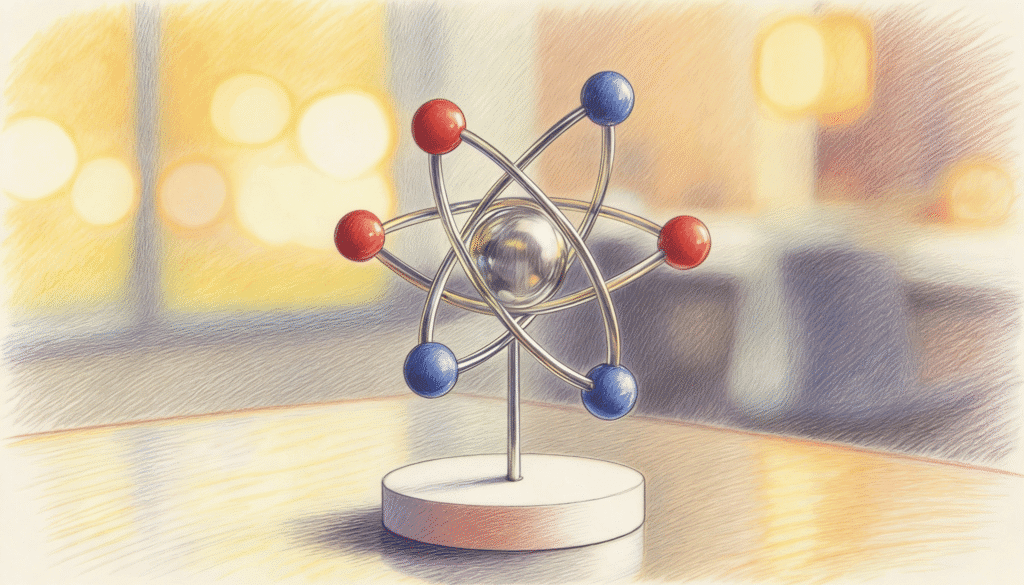
In game theory, the ply represents the fundamental unit of strategic interaction. Not the whole game, not even a full round, but one player’s single decision point. Think of it as the atom of strategy, the irreducible particle from which all competitive complexity emerges. White moves a pawn. That’s one ply. Black responds by moving a knight. That’s another ply. Two plies make what most people call a “move” in chess, but game theorists split this further because the granularity matters.
The concept seems trivial at first glance. Of course games consist of individual moves. What else would they consist of? But here lies the first counterintuitive revelation: most people think in terms of exchanges, volleys, or complete sequences. They envision conversations rather than utterances. The human brain naturally chunks information into meaningful patterns, glossing over the atomic structure beneath.
Game theory does the opposite. It insists on decomposition, on breaking strategy down to its smallest constituents. Because only at this level does the mathematics become tractable, does prediction become possible, does optimal play reveal itself.
How Twenty Moves Become Trillions of Possibilities
Consider chess again. When a beginner contemplates the board, they see pieces and positions. An intermediate player sees threats and opportunities. A master sees a tree of possibilities, branches extending from the current position through every legal move available. Each branch represents one ply. From the starting position in chess, White has twenty possible first plies (sixteen pawn moves and four knight moves). Black then has twenty responses to each of those, creating 400 possible positions after just two plies.
The numbers explode from there. After three plies, over 8,000 positions. After four, nearly 72,000. The full game tree of chess contains more positions than there are atoms in the observable universe. Yet this incomprehensible vastness emerges entirely from the repeated application of single plies, like fractals generated from simple equations.
This reveals why the ply matters: it transforms the mystical art of strategy into something analyzable. Grand strategy becomes a sequence of discrete decisions. Instead of asking “How do I win this game?” which feels overwhelming, game theory asks “What is my best move right now, given what my opponent might do next?” The impossible question becomes merely difficult.
Strategic Time Moves in Quanta, Not Streams
The ply also introduces time into strategy in a precise way. In physics, time flows continuously. In game theory, it advances in plies. This discretization might seem like a simplification, but it actually captures something true about competitive interaction. Decisions happen in moments. Words get spoken. Contracts get signed. Missiles get launched. Between these moments, time may pass, but strategically, nothing changes. The ply acknowledges this lumpy, punctuated nature of strategic time.
Consider poker. Between plies (betting actions), nothing strategic occurs. Players might shuffle in their seats or sip their drinks, but the game state remains frozen. Then someone bets, and the universe of possibilities shifts. Opponents must now decide whether to call, raise, or fold. Each of these choices constitutes a new ply, advancing the game tree one level deeper.
This brings us to an unexpected connection: the ply functions like the shutter of a camera. Between clicks, life flows continuously. But the photograph freezes a specific instant, making it analyzable. Strategic analysis requires similar freezing. The ply provides the shutter speed of game theory, determining the resolution at which we examine competitive interaction.
Finding the Right Resolution
Too broad a resolution (thinking only in terms of entire games or campaigns) and crucial details blur together. Too fine (agonizing over microseconds in a conversation) and the analysis becomes impractical. The ply typically represents the natural quantum of strategic decision making, the level at which choices actually occur.
In computer science, this concept enables artificial intelligence to master games. The minimax algorithm, which powers game playing programs, works by evaluating positions at alternating ply depths. The computer simulates possible futures by stepping through plies: “If I move here, opponent might move there, then I could move here…” Each “move” in this internal monologue represents one ply in the game tree.
When Deep Blue defeated Garry Kasparov in 1997, it could evaluate positions twelve plies deep in critical moments. The ply provides the scaffolding for machine strategy, the framework within which silicon intelligence navigates possibility space.
Plies Beyond the Board
But the real magic happens when we recognize that plies exist everywhere, far beyond board games.
Every negotiation consists of plies. One party makes an offer. The other accepts, rejects, or counters. Each of these constitutes a ply, advancing the negotiation one step through its possibility tree. Skilled negotiators intuitively understand ply depth, contemplating not just the immediate response to their offer but the subsequent rounds of counteroffers that might follow.
Markets operate in plies. A stock price sits at a particular level. Someone places a buy order. The price ticks up. Another trader sees this and places their own order. Each trade represents a ply in the vast multiplayer game of price discovery. High frequency trading algorithms compete at nanosecond ply speeds, so fast that human intuition cannot follow. Yet the structure remains the same: discrete actions advancing through decision trees.
The Power of Position in the Sequence
Here emerges another counterintuitive aspect: the player making a ply often matters less than the ply’s position in the sequence. In chess, moving first conveys a measurable advantage, worth about a third of a pawn in theoretical value. This “first move advantage” appears across competitive domains. In auctions, bidding order affects outcomes. In patent races, filing first matters. The structure of ply sequencing shapes strategic possibilities.
This explains why game theorists obsess over extensive form representations, those tree diagrams that look like branching roots turned upside down. Each node in the tree represents a decision point for some player. Each branch represents a possible ply. The whole structure maps out every possible path the game might take, every sequence of plies from start to finish.
For simple games, these trees remain manageable. Tic tac toe has a game tree with 255,168 terminal positions, computable on paper with patience. But most interesting strategic situations produce trees of impossible size. Poker. Go. Military conflict. Economic competition. The trees become too large to fully map.
Thinking Ahead When Perfect Foresight Is Impossible
Yet the ply remains useful even when complete analysis proves impossible. It provides a conceptual tool for thinking about strategy. When facing a complex decision, the question becomes: “What plies are available to me? What plies might follow from each? How many plies ahead can I realistically reason?”
This ply depth question separates strategic skill levels across domains. Beginners see one or two plies ahead. Intermediates manage three to five. Experts routinely think seven to ten plies deep. Grandmasters occasionally glimpse fifteen or twenty plies into the future, though this usually requires familiar patterns.
The limit exists because computational complexity grows exponentially with ply depth. If each player has an average of ten options per ply (a conservative estimate for chess), evaluating three plies ahead requires analyzing 1,000 positions. Six plies means one million positions. Nine plies: one billion. Human working memory cannot possibly track all these branches, so we prune aggressively, using heuristics and pattern recognition to eliminate obviously bad plies.
The Limits of Calculation
Computers face the same exponential wall but push further through raw speed. Yet even the fastest machines cannot brute force their way through chess or Go. They too must prune, must estimate, must make educated guesses about which plies matter and which can be safely ignored.
This pruning process reveals something profound about strategy. The theoretical best play might exist somewhere in the game tree, but finding it proves computationally intractable. Instead, players (human or machine) satisfice, seeking good enough plies rather than perfect ones. Herbert Simon won a Nobel Prize partly for this insight: rational actors optimize within bounds, not globally.
Words as Moves in the Game
The ply framework also illuminates why communication matters in strategic settings. Each utterance in a negotiation serves two functions. It carries information about preferences and positions. But it also constitutes a ply, advancing the game state. The content matters, but so does the mere fact that someone spoke, that their turn in the sequence arrived.
This dual nature of communicative acts appears everywhere. A central bank announces an interest rate decision. The specific rate matters. But the timing of the announcement also matters, the fact that this particular ply occurred when it did in the larger economic game. Markets move on both the substance and the sequencing.
Seeing Plies in Physical Competition
Sports provide visceral illustrations of ply dynamics. Baseball unfolds as a turn based game, with clear ply boundaries. Pitcher throws. Batter swings or takes. Each pitch/swing combination represents a ply. The count (balls and strikes) tracks the game state, determining which plies become available next.
Football’s snap does the same thing, initiating each ply in a sequence that might end with a touchdown or an interception. Basketball flows more continuously but still exhibits ply structure in possessions and shot attempts. Even soccer, despite its fluid appearance, can be decomposed into plies if we track ball possession changes and passing sequences.
The Universal Grammar of Competition
The universality of the ply structure suggests something fundamental about competition itself. Perhaps strategic interaction cannot help but discretize into turns, into moments of decision separated by intervals of consequence. The universe might flow continuously, but strategy flows in quanta.
This connects to an even deeper idea from physics. Quantum mechanics revealed that nature itself operates in discrete units. Energy comes in photons. Charge comes in electron units. Space and time might ultimately prove granular rather than smooth. The ply suggests that strategy, too, has a fundamental grain size, a natural unit of competitive interaction.
Whether this represents deep truth or useful metaphor remains unclear. But the practical value stands beyond doubt. The ply gives us a way to think about the unthinkable, to analyze the overwhelming. It breaks strategy into manageable pieces.
Consider climate negotiations between nations. The full game involves decades of decisions by hundreds of actors pursuing incompatible goals. Impossible to analyze completely. But zoom in on a single round of talks. Country A proposes emission targets. That’s one ply. Country B counters with different numbers. Another ply. The negotiation advances through discrete moves, each creating a new node in the game tree.
By tracking plies, negotiators can reason about contingencies. “If we propose this, they’ll likely counter with that, leading us to this position.” Not perfect foresight, but structured thinking about strategic possibilities. The ply framework transforms vague worries about future outcomes into concrete analysis of decision sequences.
Plies in Everyday Life
This applies to personal decisions too. Career moves form plies in a game against an uncertain future. Accept this job offer or decline? Each choice creates a new branch point, leading to different subsequent opportunities. Dating involves plies, each interaction advancing or terminating a potential relationship. Even something as mundane as email correspondence has ply structure: send or don’t send, reply or ignore.
Once you see plies, they appear everywhere. Conversations consist of alternating plies, speakers taking turns. Arguments advance through claim and counterclaim plies. Courtroom trials proceed through ply based procedures: opening statements, witness examination, closing arguments.
The legal system actually formalizes this structure, creating explicit rules about whose turn it is to move, what plies are legal at each stage. Procedure becomes a technology for managing the ply sequence, ensuring fairness through structured turn taking.
This reveals an interesting insight: the ply matters not just as an analytical tool but as a design principle. When creating any competitive system, specifying the ply structure determines much about how the game plays. Who moves when? What actions are legal at each stage? Can players move simultaneously or must they alternate?
These design choices shape strategic possibilities profoundly. Simultaneous plies (both players moving at once without seeing each other’s choice) create different dynamics than sequential plies.
Building Complexity from Simple Units
The ply remains the atom. Everything else builds from there. Strategies emerge from ply sequences. Equilibria arise from mutual best responses at each ply depth. Game trees grow branch by branch, ply by ply, from simple roots to incomprehensible complexity.
Understanding this doesn’t make anyone a grandmaster overnight. But it provides a lens for seeing strategic structure in the chaos of competition. The next time someone faces a difficult decision, they might pause and think: “What ply am I making here? What plies might follow? How deep can I see?”
That shift in perspective, from grand strategy to atomic moves, from overwhelming complexity to manageable decisions, captures the essence of game theory. The ply gives us a foothold on the infinite, a way to reason about the unreasonable.
Perhaps that’s why it endures as the fundamental unit. Not because it solves every strategic problem, but because it makes strategic problems solvable at all. One move at a time. One ply at a time. The atom of strategy, irreducible and essential.